
From Piano to Violin
There is so much talk about the need to step outside the bubble. To break the isolation that comes with working for yourself. To seek out perspectives from unfamiliar fields, trade ideas with colleagues, and turn our attention away from our own narrow worlds.
Yesterday, on a whim, I got on the Metro to Póvoa de Varzim. It wasn’t planned; just a sudden impulse because I happened to be nearby. Why not?
I enjoyed the trip immensely. I’ve always been a fan of public transport, yet I had never taken this specific route. The morning felt bright and warm. The carriage stayed quiet, almost empty. I settled into my usual habit (what I call my ‘sociological studies’) observing the people getting off at each station. Are they heading to work? Returning home? Is this a holiday? The same questions always surface: who are they? Where have they come from? Where are they going?
The journey takes about forty minutes, which gave me time to read. My mobile phone, with its persistent voice, tried to grab my attention. I refused. This was a morning for being present. For leaving the bubble and letting my thoughts rest on the small details of the day.
Why Póvoa de Varzim? There are plenty of good reasons. It is an Atlantic city, where the sea air fills every street. Better still, the people are genuinely friendly and discreet.
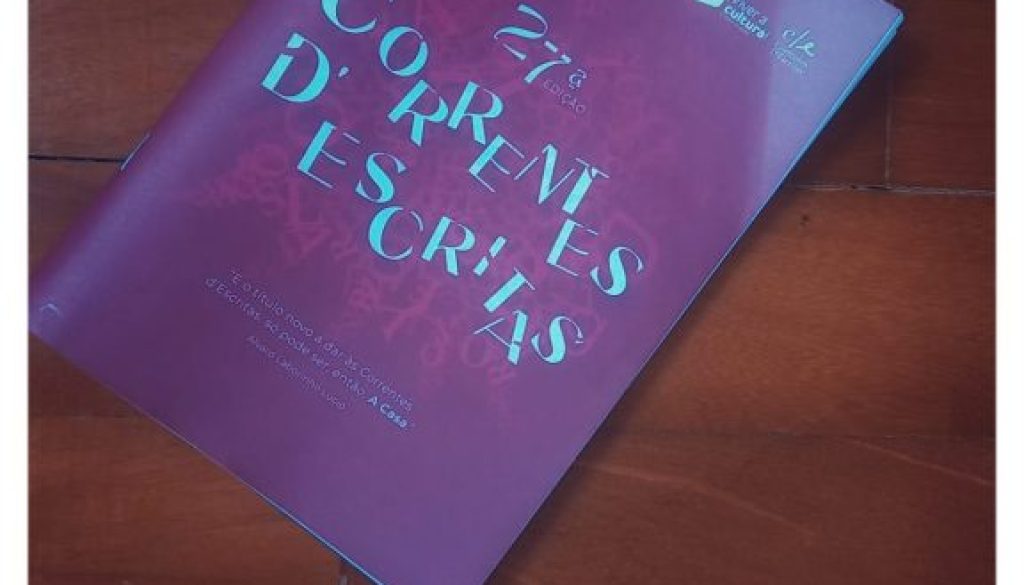
I had another reason to go: the annual Correntes d’Escritas event and the chance to hear some of my favourite writers in person. I went because of José Luís Peixoto. The icing on the cake? The third meeting of translators.
I sat and listened to an interesting conversation between Ana Paula Tavares, José Luís Peixoto, Tanja Tarbuk, and Michel Kegler. Tanja, a talented translator from Portuguese to Croatian, views translation as an act of “deep reading.” Peixoto went further, suggesting that a translation is a variation of his own work, and that the translator is the “deep reader.”
I don’t work in literary translation, yet I feel a pull toward poetic translation. It makes sense to me now. Peixoto believes a poetic translator must possess literary ambition. They must recognise that words carry nuances that shift the weight of a whole sentence. He noted that saying ‘bonito’ is not the same as saying ‘lindo’ or ‘formoso’.
He is right. Words have gradations. Capturing them requires a sensitivity suited to the soul of a poet. Those who write poems hunt for the exact word. The one with the right intensity, the right scale, the right sound. This precision helps them pull a glimpse of what they need to express from their deepest emotions. A poet enters the essence of another’s work with that same gaze, that same care, that same depth.
It felt good to hear writers talk about translation on their own terms. Sharing what bothers them, what surprises them, and what they recognise as their own.
Finally, Peixoto offered a metaphor to illustrate the translator’s work: it is a piece of music composed for one instrument and then transferred to another.
I boarded the Metro for the journey back. Watching the fields on the outskirts of Porto, with the warm sun shining through the glass, I began transferring compositions in my head: from piano to violin, from clarinet to trumpet. I filled my mind with words.